
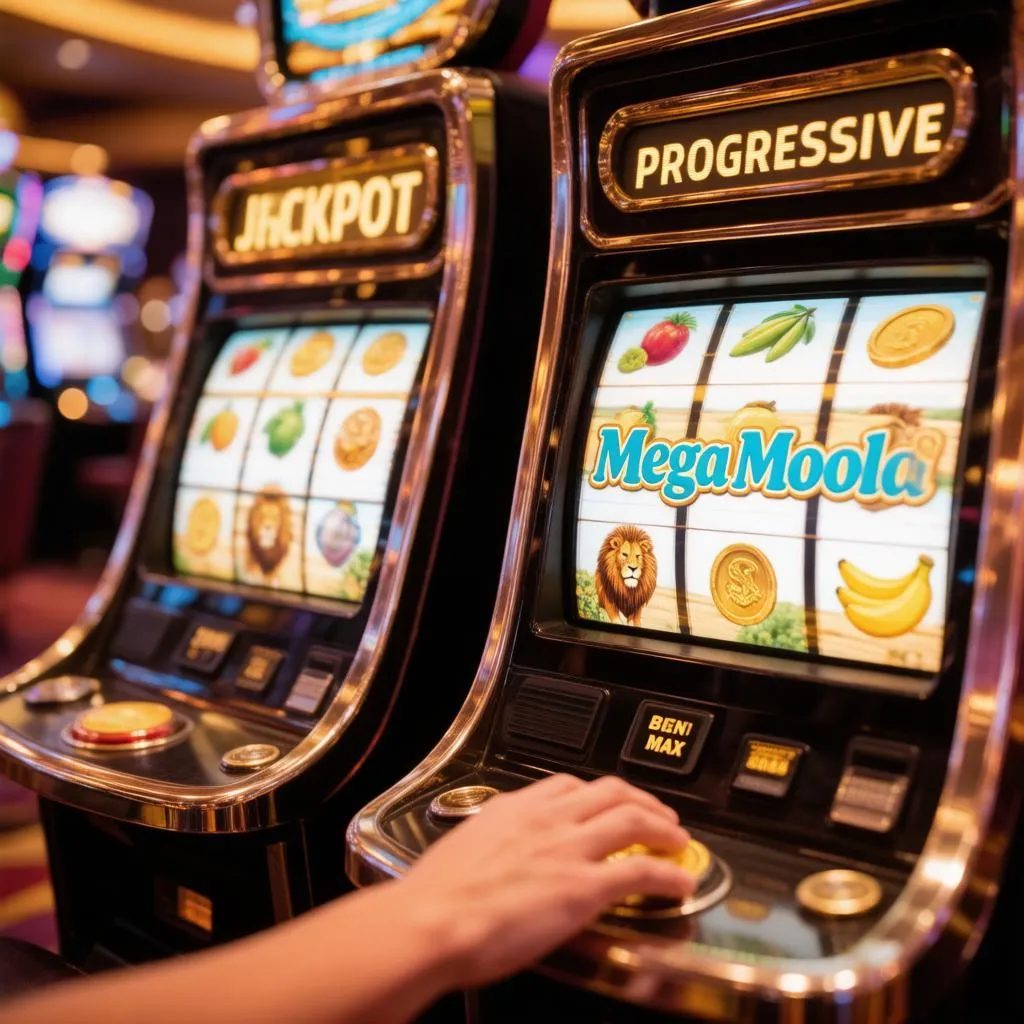
Every casino lobby has its cathedral corner: the banner showing a seven-figure number ticking upward, cent by cent, in real time. Jackpot slots occupy a strange position in gambling — they are, statistically, the worst-value games you can play, and they are also the only ones where a single spin can change a life. Both statements are true at once, and the slot industry has spent forty years perfecting the tension between them. The confusion that surrounds these games is almost entirely about mechanics: how the pot is actually funded, what happens to the base game’s payout rate when a jackpot grows, why one game pays a fixed € 50,000 every afternoon while another has gone six years without its headline prize. Understanding those mechanics changes the experience completely — not because it improves your odds, which no knowledge can, but because it lets you decide what you’re actually paying for when you sit down at a progressive. This guide breaks the whole family of jackpot slots into its three main types, follows the money behind the big number, and ends with the honest math every player should see before chasing the ticker.
What a jackpot slot actually is
At its core, a jackpot slot is a normal video slot with one added feature: a prize pot that exceeds the standard paytable. That pot is the entire difference between “Win € 500 on this spin” and “Win € 4 million on this spin.” Everything else — reels, symbols, free spins, bonus rounds — works the same way as any other game. What separates the jackpot family from ordinary slots is where that extra money comes from and how it’s awarded.
The funding mechanism is the key insight most players never see. In a fixed-jackpot game, the top prize is a line in the paytable: the game designer decided it pays, say, 5,000x your stake, and that figure is priced into the game’s RTP like any other symbol combination. In a progressive, the pot is built from a slice of every wager made by every player on the network — a tiny percentage, usually 1–3% of each bet, diverted away from normal payouts and into the pool. That diversion is the whole story: the money in the ticker is not house generosity, it is other players’ lost wagers being held in escrow, plus a seed amount the casino or supplier contributed to make the pot attractive in the first place.
The three main types
The jackpot family splits cleanly into three species, and the differences between them matter far more than the size of their headline numbers. Choosing between them is really choosing between three different questions: “What am I guaranteed to be able to win?”, “What am I funding with every spin?”, and “How rare is the moment the pot actually pays?”
| Type | How the pot works | Typical size | RTP effect | Win frequency |
|---|---|---|---|---|
| Fixed jackpot | Static prize set in the paytable; not affected by other players | € 1,000 – € 100,000 | Priced into base RTP; no hidden cost | Governed by normal game odds |
| Standalone progressive | Pool grows from bets on one machine at one casino only | € 5,000 – € 250,000 | Base RTP reduced by the diversion | Rare; resets small |
| Pooled / networked progressive | Pool built from wagers across many casinos and thousands of machines | € 100,000 – multi-million | Base RTP reduced by the diversion; prize itself scales | Extremely rare; headline prizes |
The table shows the structural trade-off that defines the whole category. A fixed jackpot pays smaller amounts more often, and the game’s payout percentage accounts for it transparently. A standalone progressive grows faster per player but pays out in one casino’s micro-economy. A networked pool — the Mega Moolah model — grows slowly in any single game session but compounds across an entire industry: thousands of players in dozens of jurisdictions each contributing their fraction, which is how the same ticker reaches eight digits. The better the pot, the worse the odds and the slower the base game pays — there is no version of this trade where the player gets both.
Fixed jackpots: the honest end of the family
A fixed jackpot is a top prize written into the paytable, exactly like the prize for five scatter symbols. It doesn’t move, doesn’t tick, doesn’t grow — and because of that, it behaves like the rest of the game. The return-to-player figure for a fixed-jackpot slot includes the probability of hitting that prize at its full advertised value, and the game pays the same 5,000x whether the machine is busy or empty, at noon or midnight.
What fixed jackpots offer is predictability. The player knows exactly what the maximum win is, knows that the amount doesn’t depend on anyone else’s activity, and can find the theoretical odds of the top tier in the game’s information screens. Many popular modern slots — particularly those built for volatile high-stakes play — use fixed top prizes in the thousands-to-millions range while quietly keeping the game’s RTP in the normal 94–96% band. For a player who enjoys slots and wants an occasional big ceiling without accepting the hidden RTP tax, this is the sensible end of the spectrum.
The trade-off is the obvious one: no ticker, no life-changing number. A € 50,000 fixed prize can fund a car or a renovation; it will not fund retirement. Fixed jackpots are, essentially, normal slots with a handsome ceiling — which is precisely their appeal to players who dislike the arithmetic of the alternative.
Standalone and local progressives
A standalone progressive is the intermediate species: one machine, or one bank of machines in one casino, feeding a single pot. The diversion from each wager is the same as in any progressive — typically 1–3% of the bet — but because the contributor base is small, the pot grows slowly and resets to a modest seed value (often a few thousand) whenever it’s won.
These games occupy a strange middle ground in the current market. They dominated land-based casino floors in the 1990s and 2000s, when the car on display by the entrance was the jackpot and the crowd gathered to watch someone trigger it. Online, the species has largely been absorbed into networked pools: with tens of thousands of simultaneous online players, a single-casino pot simply cannot compete with the headline numbers of a shared one. Where standalone progressives survive, they tend to attach to specific branded games with dedicated local audiences — and they usually win on accessibility: their odds of hitting the pot are far better than a network prize, exactly because the pot is smaller.
Pooled networks: the Mega Moolah model
The pooled network progressive is the format that turned jackpots into headline news, and Mega Moolah — Microgaming’s African-safari-themed slot launched in 2006 — is its defining example. The mechanics are simple in concept and enormous in scale: a single jackpot is shared across an entire network of participating casinos, each running the same game, with every real-money spin on every one of them feeding a percentage into the shared pot. Because the contributor base is industry-wide, the pot compounds into the millions, resets to a guaranteed seed (traditionally £ 1 million or the equivalent), and starts climbing again immediately.
How these games typically structure their pots:
- Multiple tiers inside one game. Mega Moolah pioneered the four-tier structure — Mini, Minor, Major and Mega — so the game pays smaller progressive prizes regularly while keeping the headline pot running for months or years between hits. Most modern pooled games copy this layering, because it keeps the “someone just won” excitement alive without waiting for the big one.
- A bonus wheel or random trigger. In Mega Moolah, the jackpot game is entered randomly during normal play — a wheel spins, and the segment it lands on determines which tier you hit. The trigger is not skill-based, not tied to bet size in any straightforwardly fair way, and not shown as a probability to the player. Some games weight the chance toward higher-stakes play; many pool games of this era keep the trigger identical across stake levels, which is worth checking in the paytable.
- A guaranteed seed and a reset. After any win, the pot returns to its floor — for Mega Moolah, the Mega tier starts at one million — and the diversion from every spin resumes. The ticker you see climbing is always the sum of seed plus accumulated contributions.
- A percentage-based RTP split. The pooled games publish two numbers in their info screens: the base game’s RTP and the total including the jackpot contribution. The diversion typically costs 2–3 percentage points of base RTP, which means the ordinary spins pay noticeably less than a non-jackpot slot while the pot grows.
That last point deserves the most emphasis, because it is the least advertised and most consequential fact in the entire category. When a pooled game advertises “RTP 88.12% including jackpot” — as Mega Moolah’s family does — what that means in practice is that the non-jackpot portion of the game pays back roughly 85–86% of wagers, among the lowest figures in commercial online slots. The missing percentage isn’t a house profit; it’s sitting in the ticker. The player at a pooled jackpot is, mathematically, paying a premium on every spin for the chance to be the one who eventually collects what everyone else has contributed.
Why the pot grows: following the money
It’s worth slowing down on the flow of funds, because it explains everything else about these games. Suppose a pooled game diverts 2% of every wager and has a global base of, say, 50,000 active players betting an average of € 2 per spin. That’s roughly € 2,000 entering the pool per minute of collective play — about € 2.9 million per day of continuous network activity. The pot visible on the ticker is precisely that stream, minus the amounts paid out at each tier, since the last reset.
Three consequences follow from this arithmetic:
- The pot grows because the rest of the game pays worse. Every euro in the ticker is a euro that didn’t return to the players who bet it. This is the defining trade of progressive play, and it’s not hidden — it’s published in the RTP figures — but it’s also not how the marketing presents it.
- The game never goes broke paying the jackpot. Because the pot is funded by contributions rather than house reserve, the casino can afford eight-figure prizes. This is why networks can advertise sums no fixed-jackpot game could ever sustain.
- Timing the pot is mostly an illusion. There is a folk theory that a jackpot is “due” when it’s very large, or that it hits right after someone else wins. In reality, the trigger on these games is an independent random event with the same probability on every spin; the only thing pot size changes is the value of the eventual win, not the timing of it. A € 12 million pot and a freshly reset € 1 million pot have identical trigger odds.
This is the point where the category demands its honest disclaimer: no strategy, bet size, session length or timing pattern changes the probability of the trigger event. What a player controls is only the choice of game and the budget behind it.
Choosing between them: a decision framework
With the mechanics clear, the practical question is which type fits which player — and the honest answer sorts players into three coherent profiles. Choosing well means matching the game type to what you actually want from the session, not to the size of the number on the banner.
The profiles, in order of realistic payout behavior:
- If you want regular play with occasional strong wins, play fixed-jackpot slots. You keep the full normal RTP of a good slot (94–96%), you know the maximum, and the top prize is priced into the game fairly. This is the highest-expectation choice in the category.
- If you want the chance of a mid-sized pot with better odds than the networks, look at standalone or local progressives. The pots are smaller, the trigger odds are meaningfully better, and the RTP penalty still applies but the trade is less extreme.
- If you accept the math and want the lottery-style dream, pooled networks are the only honest way to play it. The odds are the worst in slots, the base game pays least, and the expected value is clearly negative — but the jackpot is real, pooled, and occasionally creates genuine millionaires. Playing one is a rational choice only if you treat it as buying a ticket to a dream, priced in cents per spin, and not as an investment.
One practical note spans all three: every legitimate online slot publishes its RTP and jackpot mechanics in the info screens, and regulators in major licensed markets require these disclosures. The two numbers to check before any jackpot session are the total RTP including the jackpot contribution, and the bet level required for full eligibility — some older progressive designs historically paid the jackpot only at maximum bet, a trap still worth verifying.
Responsible play around jackpot games
Jackpot slots are engineered — deliberately and well — to keep attention on a number that is almost never yours. That design works on the human mind in specific ways: near-misses on the wheel, the visible tick of other people’s money, the story of last month’s winner. The defenses are the same ones that apply to all gambling, sharpened for this category: a fixed session budget in advance, never more than a small defined share of entertainment money, and the understanding that the ticker is other players’ losses, not a promise. Licensed operators in regulated markets offer deposit limits, session reminders and self-exclusion tools, and using them before the first spin of a jackpot game is the difference between the dream being entertainment and the dream becoming a budget problem. No jackpot story is worth the alternative.
Conclusion
Jackpot slots come in three species, and the differences between them are the whole game. Fixed jackpots are normal slots with a handsome ceiling and honest RTP; standalone progressives offer mid-sized pots at better odds in exchange for a slower base game; pooled networks like the Mega Moolah family build industry-scale prizes from industry-scale contributions, at the cost of the lowest base RTP in commercial slots. The pot on the ticker is not house money — it is the diversion from every spin of every player on the network, held and guaranteed, and it resets the moment someone collects it.
None of this changes the fundamental nature of the category: the trigger is random, the odds are long, and the expected value of the chase is negative by design. What the mechanics do change is the quality of the decision. A player who understands the trade — who knows they are paying a few percentage points of RTP for a shot at a shared, growing pool — can enjoy the category for what it is: the cheapest lottery ticket in the casino, bought one spin at a time. A player who doesn’t understand it is funding the dream of whoever wins next, and paying full price for the privilege. The information screens are the difference between those two positions — and they’re two clicks away from any jackpot banner in any regulated lobby.
